-
Notes on purposeful skill maintenance/improvement/neglect
Over the course of my life I’ve invested a lot of time and effort into the acquisition of different skills, abilities, competencies, specialized knowledge – for simplicity I will refer to all of it as “skills” in the following. Some of those skills, I would say, have even become an integral part of my identity, which isn’t unusual for a human, I guess. At my current age (sadly I’m not 17 anymore) I have accumulated a skill collection sizable enough that it needs to be managed systematically.
READ MORE -
The deep rabbit hole of DIY small ergonomic keyboards
READ MORE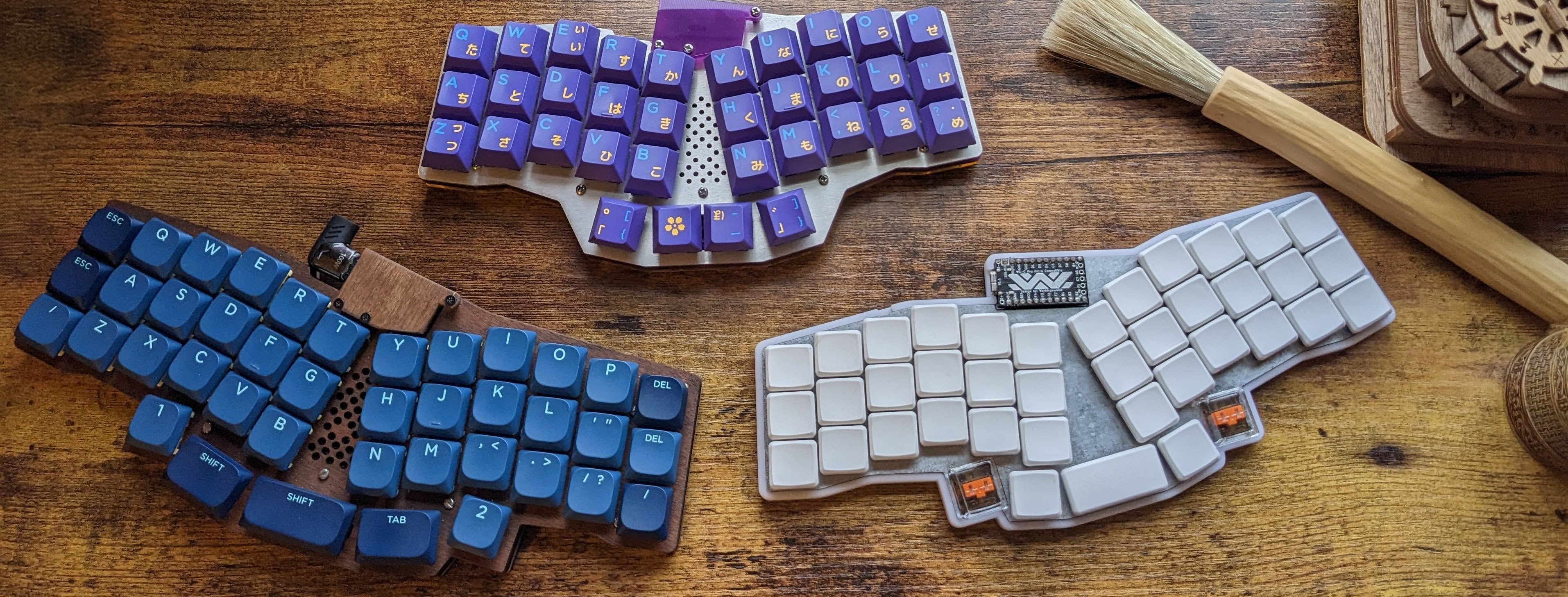
-
Comparing GPT-4, 3.5, and some offline local LLMs at the task of generating flashcards for spaced repetition (e.g., Anki)
tldr: I used GPT-4 Turbo, GPT-3.5 Turbo, and two open-source offline LLMs to create flashcards for a spaced repetition system (Anki) on a mathematical topic; I rated the 100 LLM-suggested flashcards (i.e., question-answer pairs) along the dimensions of truthfulness, self-containment, atomicity, whether the question-answer makes sense as a flashcard, and whether I would include a similar flashcard in my deck; I analyzed and compared the different LLMs’ performance based on all of that; then crowned the winner LLM :crown: or maybe not… And, because the blog post ended up being long and detailed, here is a figure combining all of the final results:
READ MORE -
Having some fun with Stable Diffusion Inpainting in Python on New Year's Day
READ MORE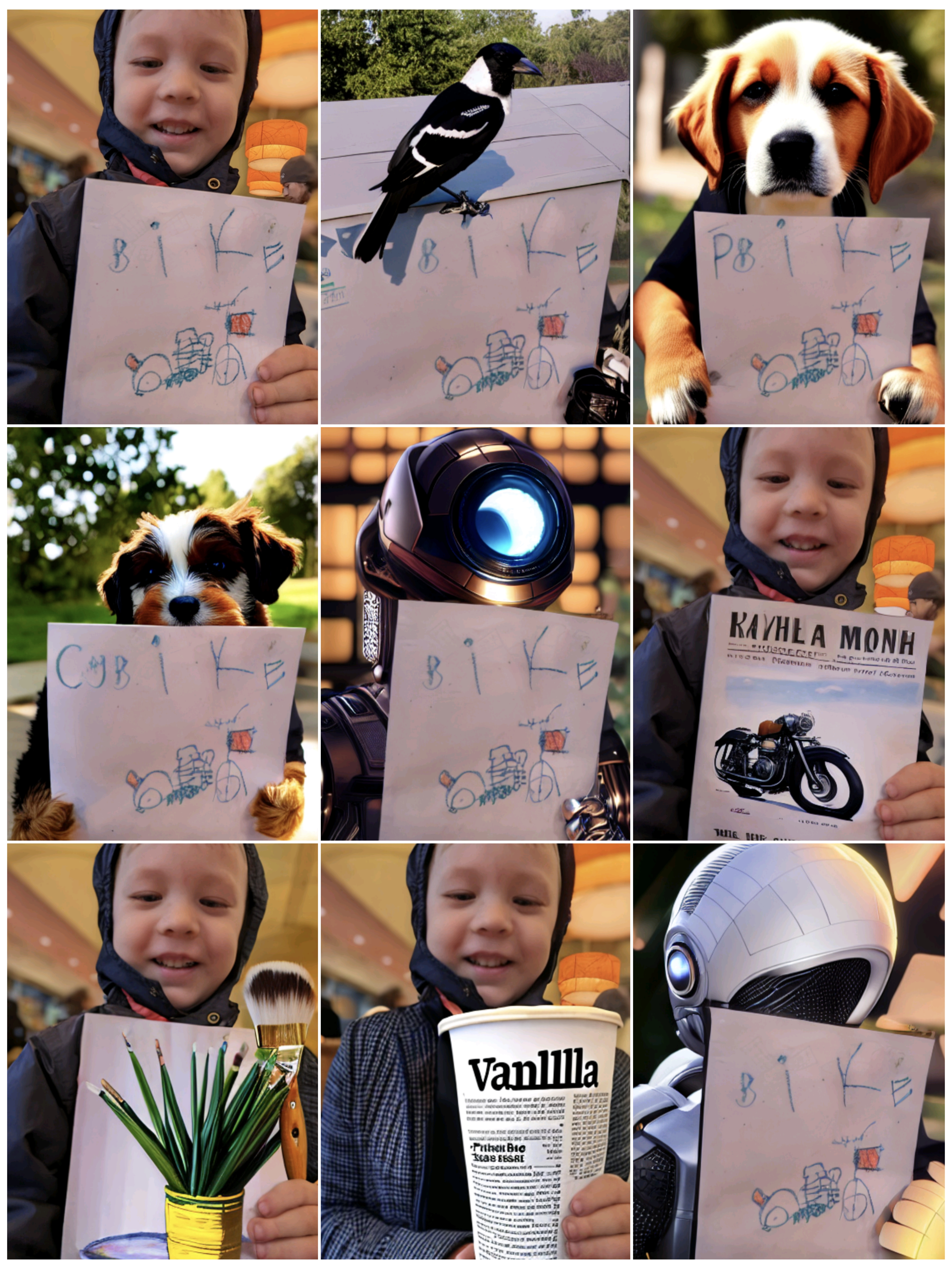
-
Concordance Correlation Coefficient
If we collect \(n\) independent pairs of observations \((y_{11}, y_{12}), (y_{21}, y_{22}), \dots, (y_{n1}, y_{n2})\) from some bivariate distribution, then how can we estimate the expected squared perpendicular distance of each such point in the 2D plane from the 45-degree line?
READ MORE -
From conditional probability to conditional distribution to conditional expectation, and back
I can’t count how many times I have looked up the formal (measure theoretic) definitions of conditional probability distribution or conditional expectation (even though it’s not that hard :weary:) Another such occasion was yesterday. This time I took some notes.
READ MORE -
Setting up an HTTPS static site using AWS S3 and Cloudfront (and also Jekyll and s3_website)
For a while now I wanted to migrate my websites away from Github pages. While Github provides an excellent free service, there are some limitations to its capabilities, and the longer I wait the harder (or the more inconvenient) it becomes to migrate away from gh-pages. AWS S3 + CloudFront is a widely-used alternative that has been around for a long time. Moreover, I was planning to get more familiar with AWS at all levels anyway. So, it’s a great learning opportunity too.
READ MORE -
Neural networks and deep learning - self-study and 2 presentations
Last month, after mentioning “deep learning” a few times to some professors, I suddenly found myself in a position where I had to prepare three talks about “deep learning” within just one month… :sweat_smile: This is not to complain. I actually strongly enjoy studying the relevant theory, applying it to interesting datasets, and presenting what I have learned. Besides, teaching may be the best way to learn. However, it is quite funny. :laughing: The deep learning hype is too real. :trollface:
READ MORE -
Probabilistic interpretation of AUC
Unfortunately this was not taught in any of my statistics or data analysis classes at university (wtf it so needs to be :scream_cat:). So it took me some time until I learned that the AUC has a nice probabilistic meaning.
READ MORE -
Mining USPTO full text patent data - An exploratory analysis of machine learning and AI related patents granted in 2017 so far
The United States Patent and Trademark office (USPTO) provides immense amounts of data (the data I used are in the form of XML files). After coming across these datasets, I thought that it would be a good idea to explore where and how my areas of interest fall into the intellectual property space; my areas of interest being machine learning (ML), data science, and artificial intelligence (AI).
READ MORE
- ← Newer Posts
- Page 1 of 5
- Older Posts →